
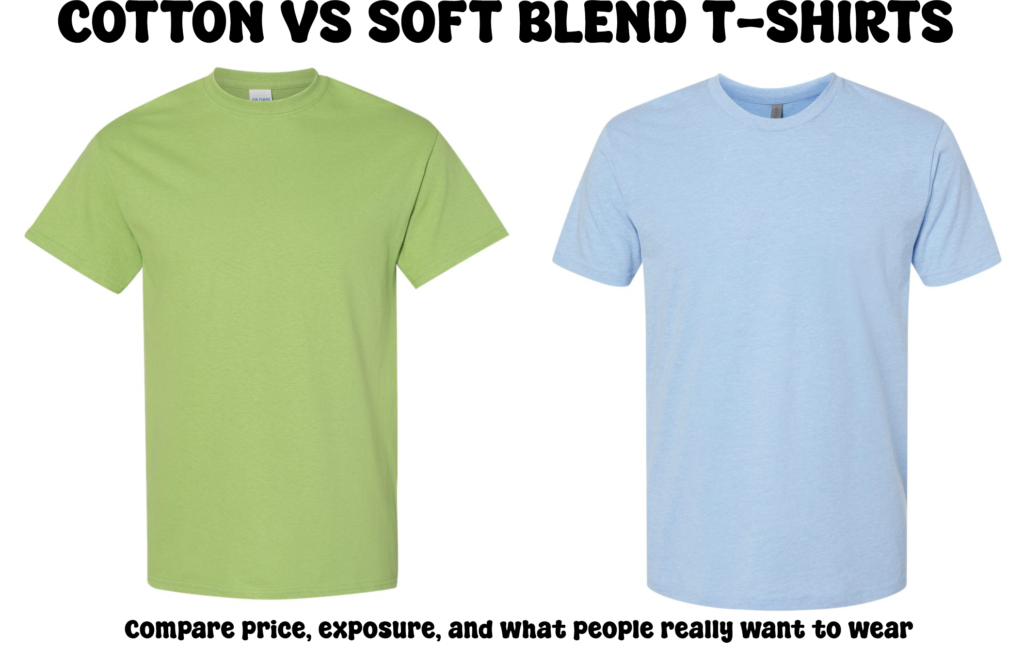
Why Customers Pay More for Softer T‑Shirts — And Why It’s Worth It
softer t-shirts vs cotton t-shirts. Every print shop has seen it: a client chooses an upgraded, softer tee and pays more without blinking. At first glance it’s just a fabric choice — but that decision changes how often the shirt gets worn, how customers feel about your brand, and the long‑term value of the purchase. Here’s why people pay extra for soft tees, why it matters, and what drives them to that choice.
Comfort Drives Wearability — and Brand Exposure
Soft fabrics (tri‑blend, ring‑spun cotton, airlume, modal blends) feel better against the skin. That comfort means shirts get worn more often. A promo tee or team jersey that’s worn regularly turns into repeated brand exposures and word‑of‑mouth marketing. In short: a softer shirt isn’t just more pleasant — it’s better advertising. We get new customers in here all the time who bring a shirt they own and want to match it’s softness. They say it’s their favorite shirt to wear and now they are in my shop wanting the same thing they have to wear everyday for work.
Perceived Quality = Higher Perceived Value
Customers associate soft, lightweight fabrics with higher quality. When the fabric drapes well and the print sits nicely on the surface, buyers assume the whole product is premium. That elevates their perception of the brand paying for the shirts — perfect for client gifts, retail lines, or staff uniforms. These shirts cost more compared to a traditional cotton t-shirt and customers are generally willing to pay more. They know at the end of the day these soft shirts are shirts people are going to wear.
Better Printing Results for Many Methods
Some softer shirts take prints differently. Ring‑spun cotton and airlume often produce crisper edges and better hand feel with screen printing and DTF. Water‑based inks and discharge processes pair exceptionally well with softer, higher‑cotton fabrics to create a soft‑hand print that blends into the shirt instead of sitting on top. For retail and lifestyle brands, that integration is a huge selling point. Of course design and ink colors are the determining factor for the overall feel of the screen print.
Longevity and Customer Satisfaction
While heavy cotton can be durable, higher‑quality soft tees often maintain shape and color longer when cared for properly. Once a customer choooses a soft blend shirt they never go back to cotton. this is a win for the softer t-shirts vs cotton t-shirts.
Fit and Fashion Matter
Soft tees usually have better cuts and finishes: modern fits, shoulder taping, side seams, and softer collars. These details make the shirts look and feel more stylish, which is important when you’re printing for events where people want to wear the shirt outside the event (concerts, retail lines, branded apparel). It’s the reason your largest cotton t-shirt manufacturers all created softer versions 10 years ago.
soft t-shirts vs cotton t-shirts
Everybody has a budget for their apparel. It’s a matter of can you squeeze a little more out of that budget to gain a 10 fold difference in how much the user wears the softer shirt compared to the cotton t-shirt? We are a business just like every other business and budgets are there for a reason. It’s not always feasable to stretch a budget for say dvertising for instance, because the juice might not be worth the squeeze. The return on increasing your advertising budget does not always have concrete evidence. But when people tell you they’d wear a soft shirt all the time, that’s all you need to know. That’s concrete validation.
Contact us here for a price quote: Online Quote Form – T-shirt and apparel printing | St. Louis Missouri