
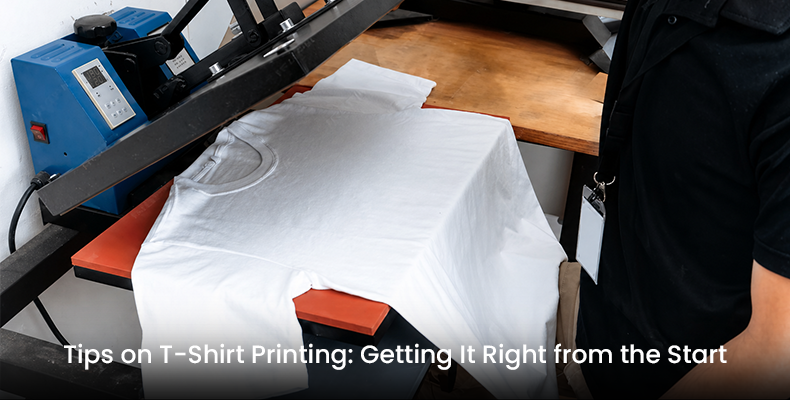
T-shirt printing looks simple on the surface—pick a design, pick a shirt, press print.
But anyone who’s actually worked with apparel knows it rarely plays out that smoothly.
Small choices change everything, from how the shirt feels to how long it lasts.
Whether it’s for a business, school event, or local fundraiser, good results usually come down to a few smart decisions made early.
And honestly, that’s where most people either save money or waste it.
Start With The Purpose, Not Just The Design
Before anything gets printed, the first question should be, What is this shirt actually for?
A promotional giveaway isn’t the same as a staff uniform. A one-time event shirt doesn’t need the same fabric quality as something worn weekly.
This is where many people rush into t-shirt printing without thinking it through. The design matters, yes—but the usage matters more.
If the goal is visibility, simplicity usually works better. If the goal is long-term wear, fabric quality starts to matter a lot more than people expect.
A shirt that looks great but isn’t worn often doesn’t really do its job.
Keep The Design Readable And Intentional
One of the most common mistakes in t-shirt printing is overcomplicating the design.
Small text, too many details, or low contrast can turn a good idea into something people barely notice. A shirt usually gets viewed from a few feet away, not up close like a poster.
So the question becomes simple: can someone understand it quickly?
Bold shapes, clean spacing, and strong contrast usually win in real-world settings. That’s especially true for event apparel or St. Louis t-shirts used for community branding, where visibility matters more than complexity.
If someone has to squint, the design is already working against itself.
Fabric Choice Changes Everything
Not all shirts behave the same once printed. Cotton, blends, and lightweight fabrics each react differently to ink and heat.
A softer shirt often gets worn more, but it may also behave differently during printing. Heavier cotton tends to hold structure better, especially for bold designs.
In practical t-shirt printing, fabric choice can affect:
- ink absorption
- colour vibrancy
- durability after washing
- overall comfort
For St. Louis t-shirts used in local events or business branding, comfort often decides whether the shirt stays in rotation or gets pushed to the back of a drawer.
People don’t wear what they don’t like touching.
Colour Contrast Is More Important Than People Think
A design can look perfect on a screen and still fail on fabric. That usually comes down to contrast.
Dark ink on dark fabric tends to disappear. Light ink on light fabric does the same thing. What works best is clear separation between design and background.
Good t-shirt printing relies heavily on this balance. It’s not just about choosing nice colours—it’s about making sure the design actually stands out in real lighting conditions.
For example, many St. Louis t-shirts designed for outdoor events use high-contrast combinations for exactly this reason. Sunlight changes everything.
If the design blends in, the message is lost.
Order Size Affects Cost More Than Most Expect
Here’s something people often underestimate: quantity changes everything.
In t-shirt printing, setup work is usually the fixed cost. Once that’s done, larger runs become more efficient per piece.
That’s why bulk St. Louis t-shirts orders for schools, teams, or companies tend to cost less per shirt than smaller runs.
It’s not a discount trick—it’s production logic.
More shirts mean the setup cost gets spread out, which naturally lowers the cost per unit.
Simple math, but it surprises people all the time.
Think About Wear, Not Just Print Quality
A shirt isn’t finished when it leaves the printer. It has a second life after that—washing, drying, stretching, and repeated use.
Good t-shirt printing takes that into account. The ink needs to stay stable, and the fabric needs to survive real wear.
This is especially important for St. Louis t-shirts used in staff uniforms or recurring events. If the shirt fades too quickly, the branding effort weakens fast.
A good print is one people forget about—because it just keeps holding up.
Don’t Ignore Placement And Sizing
Where the design sits on the shirt matters more than people expect.
A logo that’s too small on a large shirt can look lost. A design placed too low or too high can feel awkward even if the artwork itself is strong.
In professional t-shirt printing, placement is usually tested before full production. Front centre, left chest, and back placements all serve different purposes.
Many St. Louis t-shirts used for team or event branding rely on consistent placement so groups look unified, not scattered.
It’s a small detail that changes the whole feel.
Final Thoughts
Good t-shirt printing isn’t about luck—it’s about decisions stacking up in the right order.
Clear purpose. Simple design. Smart fabric choice. Strong contrast. Proper scale.
When those pieces line up, the final product doesn’t just look good—it gets worn, remembered, and noticed.
And that’s really the point behind most St. Louis t-shirts or any well-made printed apparel. Not just something to produce, but something people actually keep using without thinking twice about it.