
Custom apparel shows up in more places than people realize—work events, school teams, fundraisers, even small local launches where everyone is trying to look like they’ve got their act together. And most of the time, when consistency, durability, and cost matter, one method keeps coming back into the conversation. Screen printing.
It’s not new. It’s not fancy. But it sticks around for a reason.
How Screen Printing Actually Works In Real Production
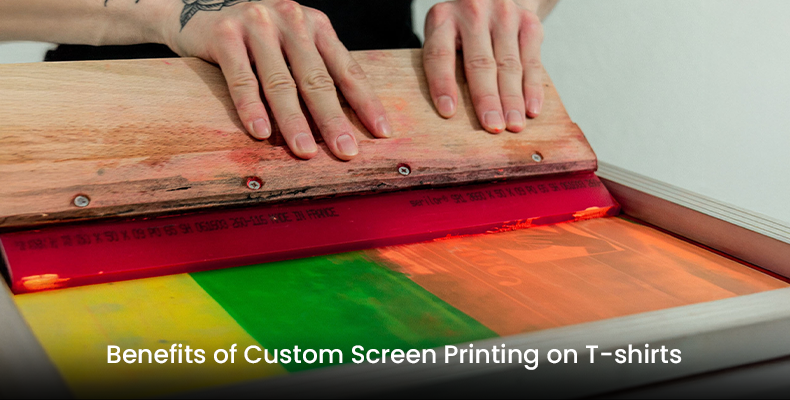
Screen printing is a straightforward process, but there’s more going on behind the scenes than most people expect. A mesh screen is prepared for each colour in a design, ink is pushed through with a squeegee, and the image is layered onto fabric.
Simple idea. Slightly more setup in real life.
Once the screens are made, production becomes efficient. That’s where scale starts to matter. A 50-shirt order behaves very differently from a 500-shirt order, and that’s something printers think about immediately when quoting jobs.
That’s just how screen printing operates—setup heavy upfront, fast once it’s rolling.
Not complicated, but very process-driven.
Brand Visibility That Doesn’t Feel Like Advertising
One thing people underestimate is how often a shirt gets worn outside its “intended moment.” A staff tee doesn’t stay at work. An event shirt doesn’t stay at the event.
It goes everywhere.
That’s where custom screen print shirts start doing quiet marketing work. No ads, no push notifications—just repeated exposure in everyday life.
A clean logo on a well-fitted shirt can sit in someone’s visual memory without forcing itself in. It’s not loud branding. It’s repetition through real wear.
And that tends to last longer than most digital impressions.
Cost Structure That Actually Makes Sense At Scale
Here’s where screen printing becomes very practical.
The setup work is the expensive part—screens, alignment, prep time. Once that’s done, each additional shirt becomes cheaper to produce.
That’s why bulk orders matter.
A 20-shirt order and a 200-shirt order are not just different in quantity—they’re different in how the whole job is built. The cost per shirt drops because the setup cost gets spread out.
That’s the real advantage behind custom screen-print t-shirts when ordered in volume.
It’s not just “cheaper in bulk” in a vague way—it’s structurally more efficient once you pass a certain threshold.
That’s why schools, teams, and businesses lean on it so often.
Durability That Holds Up After Real Use
A printed shirt is only useful if people actually keep wearing it.
Screen printing holds up well because the ink bonds directly to the fabric surface. It’s not sitting loosely on top, and it’s not disappearing into the weave either. When done properly, it handles repeated washing without breaking down quickly.
There’s always wear over time—nothing is permanent—but compared to many quick-print alternatives, it tends to stay solid longer.
That matters more than people think when shirts are meant for regular use, not just one-time events.
Design Simplicity That Works In The Real World
There’s a quiet rule in printing that shows up constantly: simpler designs tend to print better.
Not always, but often.
Bold shapes, readable text, and strong contrast translate best through screen printing. Extremely detailed artwork can still be done, but it changes production complexity and sometimes cost.
That’s where experience comes in. A design that looks good on a screen doesn’t always behave the same way once ink and fabric are involved.
It’s not about limiting creativity—it’s about understanding how the process reacts to the design.
Why Consistency Matters More Than People Expect
When you line up 100 shirts for a team or event, small inconsistencies become obvious fast. Slight shifts in placement or colour variation can stand out when everything is supposed to match.
Screen printing is built for repetition once set up correctly. Same screens, same ink mix, same press settings.
That consistency is one of the reasons larger orders still rely on it heavily. It removes uncertainty once production starts.
Nothing perfect, but very controlled.
Real-World Use Cases Where It Just Works
Most of the time, screen printing shows up in situations like:
- staff uniforms
- school spirit wear
- community events
- fundraisers
- branded merchandise runs
These aren’t fashion experiments. They’re practical needs.
People want something that looks good, lasts long enough, and doesn’t blow the budget. That combination is where this method stays relevant.
When Screen Printing Is The Right Call
Not every job is the same. Small runs with highly complex imagery might lean another direction. But when the order grows, or when simplicity and durability matter more than ultra-detailed visuals, screen printing becomes the practical choice.
It scales well. It repeats well. It holds up in real use.
That’s really the point.
Final Thoughts
Custom apparel works best when it’s actually worn—not just produced.
That’s where screen printing quietly earns its place. It’s not trying to be trendy or overly technical. It’s just reliable, repeatable, and built for real-world use.
And in most cases, that’s exactly what businesses, schools, and organisations actually need—shirts that don’t just exist, but get used again and again without falling apart or losing impact.